
Inside a volcanic crater community in Kenya, turning soil erosion into a shared vision for regeneration.
A place shaped by fire below and life above, where an ancient volcano meets the daily rhythms of farming and forest.
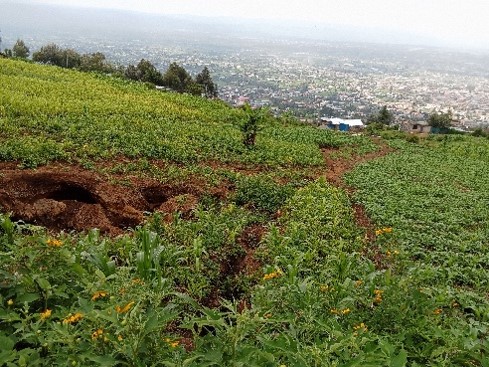
Menengai is a unique place defined by its volcanic origins and the vast crater. It is home to an urban forest that not only shapes the scenery but also serves as a source of tourism and geothermal energy. The surrounding community is largely agricultural, relying on small parcels of land for subsistence farming. Heavy dependence on the forest for fuel, fodder, and other livelihood needs has placed significant pressure on both forest and farmland. This strain is intensified by the area’s steep slopes, which accelerate soil erosion and degradation, threatening the livelihood of the local community and beyond.
Behind every farming decision lies a trade-off between what the land can give today and what it can sustain tomorrow.
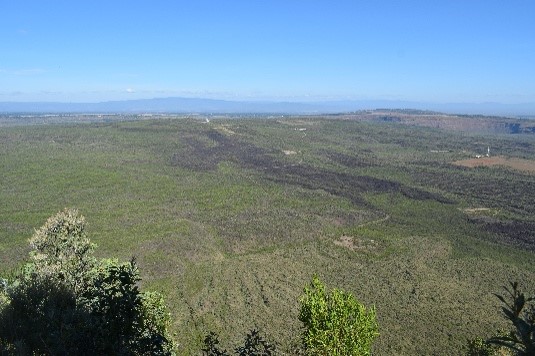
Understanding both the landscape and the people living within it was critical in identifying challenges as well as untapped potential. The Menengai Community relies heavily on rainfed agriculture for its livelihoods, but the practices often accelerate land degradation, deforestation, soil erosion, affecting not only the farms , but also disrupts the Lake Nakuru ecosystem downstream through silting. By applying the Story of Place framework (Function, Being, and Will) the community’s perspective was broadened beyond short term productivity and income. The community has been adopting practices such as planting cover crops and other eco benefit species that not only provide food and fodder but also conserve soils, thereby linking livelihood improvement with ecological restoration.
Rather than being told what was wrong, the Menengai community was invited to see it for themselves.
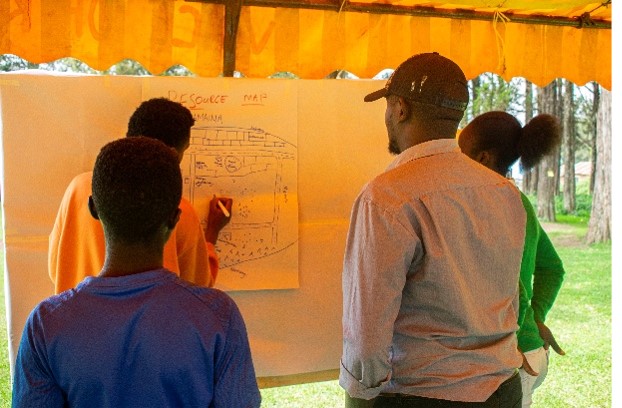
Participants drew an area map that highlighted key features such as the caldera and the Menengai urban forest, valued for its non‑timber benefits like bee‑keeping. The map also depicted household farms where families live and cultivate. By drawing a “reconnection tree,” the community visualized how activities such as charcoal burning, illegal logging, farming along slopes, excessive use of inorganic fertilizers, and leaving soils bare were impacting nature. This exercise enabled them to recognize the imbalances driving environmental degradation. Role‑play sessions further reinforced the importance of critically re‑examining community practices and their long‑term implications for both natural resources and livelihoods.
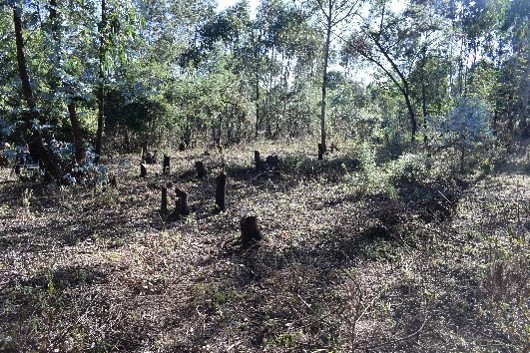
Real change didn’t come from a single intervention, it came from a shift in how the community saw its own potential.
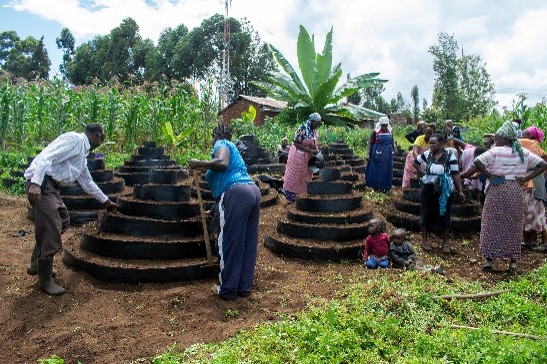
Applying the story of place revealed that subsistence conditions often push communities to prioritize immediate survival over long‑term sustainability. At the outset of our engagement, many participants expected direct handouts such as livestock (poultry or goats) as the main form of support. Shifting this mindset requires patience and consistent effort, which is achieved by farmers working together in groups where they recognize their own potential. For example, 7 common interest groups have been formed, and members are identifying themselves as a unit, supporting each other through peer learning and collective purchase of inputs like feeds. Importantly, integrating the aspirations of nature into community planning does not happen automatically; it must be intentionally fostered. Within the farmers’ groups, practices like composting, establishing cover crops, and planting agroforestry and fruit trees become part of the vision.
The Community Shares…
“The forest is not an inheritance from our forefathers, but a loan to our children”
“If we destroy nature, nature will destroy us’ A famous quote by Nobel winner Prof. Wangari Mathai, requoted by a farmer.”
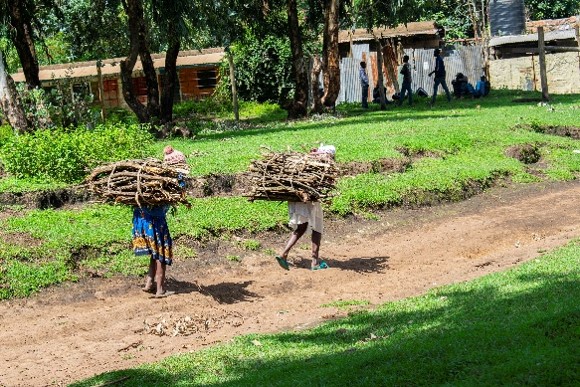
“God created Man last after the land, animals, and plants. This means the world can exist without man, but man cannot exist without the world.” (the term ‘world’ meaning the natural resources like rivers, forests, land, animals).
Community Engagement Session Video
More about the “Story of Place”